Introduction
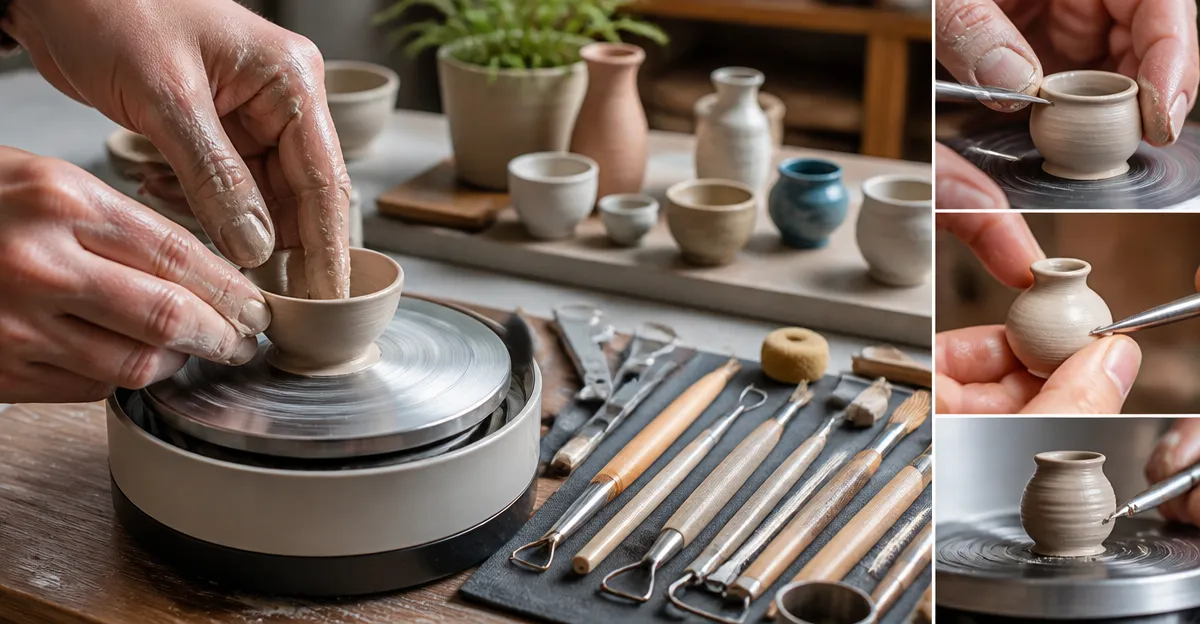
This guide explores advanced techniques for throwing miniature pottery on small wheels. Readers will learn how to prepare clay, master precise hand movements, and apply finishing methods that elevate tiny vessels to professional quality. The article also recommends specific mini wheels that enhance control and reliability during delicate work. By the end of the guide, one will possess the knowledge required to create consistent, high‑quality mini pieces.
Background and Context
Miniature pottery occupies a niche that blends fine art with functional craft. Unlike studio‑size wheels, mini wheels demand heightened sensitivity because the turntable diameter is limited to six to eleven inches. The reduced mass of the wheel head amplifies any imbalance in the clay, making centering and wall building more challenging. Understanding the physics of centrifugal force, speed ranges, and material properties is essential before attempting advanced forms.
Understanding Mini Wheel Dynamics
Mini wheels typically operate within a speed range of 60 to 300 revolutions per minute (rpm). Lower speeds facilitate centering and initial shaping, while higher speeds allow smooth wall pulling. A brushless motor, such as the 350W unit found in the VEVOR 11in Pottery Wheel Kit, provides consistent torque with minimal vibration, which is crucial for maintaining symmetry on a small turntable. The presence of a foot pedal enables hands‑free speed modulation, allowing the potter to adjust momentum without interrupting the throwing rhythm.
Another key factor is the lift‑top design. Adjustable height, ranging from 0 to 6 inches, accommodates users of different statures and enables ergonomic positioning. The VEVOR 11in Pottery Wheel incorporates this feature, reducing strain on the back and shoulders during prolonged sessions. Stability is enhanced by reinforced pads at the base, which prevent wobble that could otherwise distort the thin walls of miniature vessels.
Preparing the Clay for Miniature Throwing
Successful miniature throwing begins with properly conditioned clay. Air‑dry clay, such as the 2.2 lb package included in the Insnug Mini Pottery Wheel kit, offers convenience for beginners but lacks the plasticity of stoneware. For professional results, one should wedge stoneware or porcelain to eliminate air bubbles and achieve uniform moisture content. The wedge should be compact enough to fit within the limited workspace of a six‑inch turntable.
After wedging, the clay ball should be measured to a weight of 1 to 2 pounds for most mini projects. This weight range provides sufficient mass for the wheel to maintain momentum without overloading the motor. Centering a small mass requires a steady, slow hand; using the lowest speed setting (approximately 60 rpm) ensures the clay does not spin out of control. The foot pedal on the VEVOR models offers precise incremental adjustments, which is advantageous during this delicate phase.
Techniques for Miniature Forms
Once centered, the potter can employ several advanced techniques tailored to mini wheels. The first technique is “micro‑pulling,” where the walls are raised slowly while maintaining a consistent thickness of 1 to 2 mm. Because the turntable surface is smaller, the potter must keep the hands close to the wheel head to avoid excessive leverage that could cause wobble. A wooden rib from the included tool sets, such as those supplied with the VEVOR 14in Pottery Wheel, provides a gentle surface for shaping without marring the clay.
The second technique is “double‑wall construction,” which creates a hollow interior by building an inner wall, allowing it to dry partially, and then adding an outer wall. This method is particularly effective for mini teapots and vases where structural integrity is critical. The adjustable lift‑top of the VEVOR 14in wheel permits the potter to raise the wheel head to a comfortable height, facilitating the addition of the outer wall without straining the back.
Finally, “textured imprinting” can add visual interest to small pieces. The stainless‑steel tools included with the VEVOR wheels enable precise incisions, while the softer wooden tools allow for subtle surface modulation. Because the turntable rotates at lower inertia, the imprint patterns remain crisp and uniform across the circumference.
Finishing and Decorating Mini Pieces
After shaping, the drying stage is critical for miniature pieces. Rapid drying can cause cracking, especially on thin walls. It is advisable to cover the work with a damp cloth and allow it to dry slowly for 24 hours before any handling. For air‑dry clay projects, the included acrylic paints in the Insnug kit provide a convenient finishing option. For stoneware, bisque firing followed by glaze application yields a professional finish.
When applying glaze to mini vessels, a fine‑brush technique is recommended to avoid pooling, which can obscure delicate details. The Alldeer Mini Pottery Wheel kit includes a set of twelve paints and two brushes, making it suitable for hobbyists who wish to experiment with color directly on the wheel. After glazing, a low‑temperature kiln (approximately 1000 °C) is sufficient for most mini pieces, though the exact temperature depends on the clay body used.
Product Recommendations for Mini Wheel Throwing
Choosing the right wheel can dramatically affect the learning curve and final quality of miniature pottery. The VEVOR 14in Pottery Wheel offers a large turntable, robust 450W motor, and a waterproof LCD panel that simplifies speed adjustments. Its 60 dB noise level ensures a quiet workspace, and the included 16‑piece tool set supports a wide range of techniques.
For those with limited space, the Insnug Mini Pottery Wheel provides a compact six‑inch metal turntable, dual‑direction control, and a complete starter kit that includes air‑dry clay. The wheel’s low weight (2.2 lb) makes it portable, while the 60 dB output maintains a peaceful environment.
The Alldeer Mini Pottery Wheel is designed specifically for children and beginners, featuring a simple 0–300 rpm speed control and an all‑in‑one kit with paints, brushes, and clay blocks. Its sturdy construction and safety‑first design make it an excellent educational tool.
For intermediate users who require more power without sacrificing size, the VEVOR 11in Pottery Wheel Kit delivers a 350W brushless motor, removable ABS basin, and a comprehensive tool set. Its rating of 4.4 out of 5 stars from 256 reviews indicates strong customer satisfaction.
Finally, the VEVOR 11in Pottery Wheel combines a compact footprint with a powerful motor and adjustable lift‑top, making it a versatile choice for both seated and tabletop setups. Its 4‑star rating from 620 reviews reflects a balanced performance profile.
Comparison and Selection Guide
| Feature | VEVOR 14in | VEVOR 11in Kit | VEVOR 11in | Insnug Mini | Alldeer Mini |
|---|---|---|---|---|---|
| Turntable Diameter | 14 in (35 cm) | 11 in (28 cm) | 11 in (28 cm) | 6 in (15 cm) | 6 in (15 cm) |
| Motor Power | 450W brushless | 350W brushless | 350W brushless | Not specified (low‑power) | Not specified (low‑power) |
| Speed Range | 60‑300 rpm | 60‑300 rpm | 60‑300 rpm | Variable, dual‑direction | 0‑300 rpm |
| Noise Level | 60 dB | 60 dB | 60 dB | 60 dB | Not listed |
| Adjustable Height | 0‑6 in | 0‑6 in | 0‑6 in | Fixed | Fixed |
| Included Tools | 16 pieces (metal & wood) | 16 pieces (metal & wood) + apron | 16 pieces (metal & wood) | 5 tools + clay | Full starter kit |
| Price (USD) | 159.90 | 81.90 | 103.61 | 60.77 | 69.99 |
| Rating | 4/5 (620 reviews) | 4.4/5 (256 reviews) | 4/5 (620 reviews) | 4.1/5 (1,310 reviews) | 4.3/5 (251 reviews) |
When selecting a wheel, consider the size of the projects, available workspace, and budget. Larger turntables accommodate broader forms such as mini bowls and vases, while smaller wheels excel for compact items like jewelry cups. The VEVOR models provide professional‑grade motors and adjustable height, making them suitable for serious hobbyists. The Insnug and Alldeer wheels are ideal for beginners or educational settings where cost and portability are paramount.
Best Practices & Tips
- Maintain a consistent speed during centering; abrupt changes cause the clay to wobble.
- Use the foot pedal for fine speed control rather than relying on hand‑adjusted knobs.
- Level the wheel head with a spirit level before each session to prevent tilt‑induced distortion.
- Keep the splash basin clean and dry to avoid slipping of the clay during shaping.
- Practice micro‑pulling on a test ball before attempting final pieces; this builds muscle memory for thin walls.
- Store tools in a dry container after use to prevent rust on metal implements.
- Document each throw with photographs to track progress and identify areas for improvement.
Frequently Asked Questions
- What is the ideal speed range for centering mini clay?
- Centering is most reliable between 60 and 90 rpm, allowing the potter to feel the clay’s movement without excessive momentum.
- Can I use stoneware clay on a mini wheel?
- Yes, provided the stoneware is wedged to a suitable moisture level and the wheel motor can sustain the required torque, which the VEVOR 350W models can handle.
- How do I reduce noise in a small studio?
- Select a wheel with a brushless motor and a noise rating of 60 dB or lower; the VEVOR wheels meet this specification.
- Is a foot pedal necessary for miniature throwing?
- A foot pedal is highly recommended because it permits hands‑free speed adjustments, which is essential for maintaining steady pressure on small pieces.
- What maintenance does the wheel require?
- Regularly wipe the motor housing, tighten any loose bolts on the base, and clean the detachable water basin after each use to prevent corrosion.
- Can children safely use these mini wheels?
- The Insnug and Alldeer models are designed with safety in mind, featuring low voltage power supplies and rounded edges; adult supervision is still advisable.
Conclusion
Advanced miniature wheel throwing combines precise technique with the right equipment. By understanding wheel dynamics, preparing clay correctly, and applying specialized shaping methods, one can produce professional‑grade mini ceramics. The product recommendations presented align with the technical requirements discussed, offering options for beginners, intermediate hobbyists, and serious artisans alike. Consistent practice, adherence to best practices, and thoughtful selection of tools will ensure continual improvement and artistic satisfaction.
Products Featured in This Guide
VEVOR 14in Pottery Wheel
Price: $159.90 | Rating: 4/5 (620 reviews)
Featured for its large 14‑inch turntable, powerful 450W motor, and comprehensive tool set that support advanced miniature techniques.
VEVOR 11in Pottery Wheel Kit
Price: $81.90 | Rating: 4.4/5 (256 reviews)
Featured for its 350W brushless motor, removable ABS basin, and value‑packed tool kit suitable for intermediate hobbyists.
VEVOR 11in Pottery Wheel
Price: $103.61 | Rating: 4/5 (620 reviews)
Featured for its adjustable lift‑top, stable base, and foot‑pedal control that aid ergonomic miniature throwing.
Insnug Mini Pottery Wheel
Price: $60.77 | Rating: 4.1/5 (1,310 reviews)
Featured for its compact six‑inch turntable, dual‑direction control, and all‑in‑one starter kit ideal for beginners.
Alldeer Mini Pottery Wheel
Price: $69.99 | Rating: 4.3/5 (251 reviews)
Featured for its child‑friendly design, complete paint and clay accessories, and simple speed control that encourages early creativity.