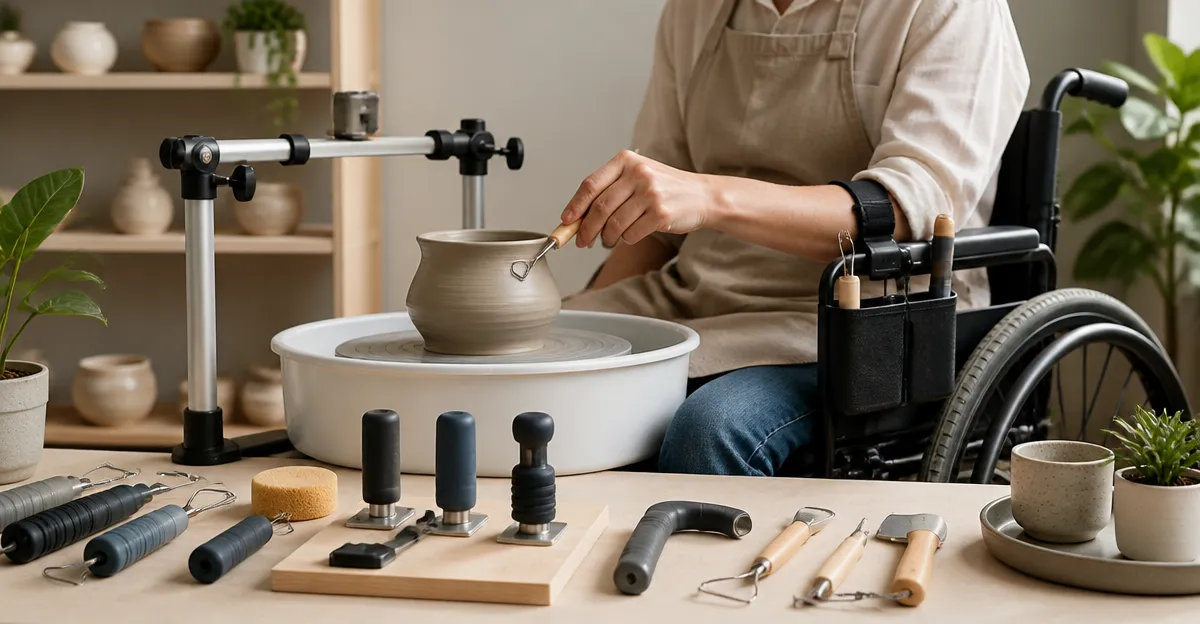
Adaptive Pottery Tools for Limited Mobility: The Ultimate Guide to Accessible Clay-Making
Introduction
This guide explores how artists with limited mobility can continue to enjoy clay‑making without compromising safety or creative freedom. Readers will learn essential ergonomic principles, discover tool adaptations that reduce strain, and receive curated product recommendations that have proven effective for a wide range of abilities. By the end of the article, one will be equipped to select the most suitable tools, apply best‑practice techniques, and answer common concerns about accessibility in pottery.
Background and Context
Pottery traditionally relies on repetitive hand motions, sustained grip strength, and the ability to manipulate heavy blocks of clay. For individuals with reduced hand dexterity, arthritis, or limited arm reach, these demands can become barriers. Modern adaptive design addresses these challenges through lightweight materials, ergonomic handles, and modular accessories that allow fine control with minimal effort. Understanding the interplay between tool weight, handle shape, and speed control is essential before selecting a kit.
Two core concepts underpin adaptive pottery:
- Leverage and Grip: Tools with larger, contoured handles distribute pressure across the palm, reducing localized stress.
- Speed Modulation: Variable‑speed rotary devices enable slow, precise movements for detail work and faster speeds for bulk shaping, allowing the user to match tool output to physical capability.
When these principles are applied, artists can achieve the same level of detail as traditional methods while preserving joint health and minimizing fatigue.
Ergonomic Tool Categories
Adaptive pottery tools can be grouped into three functional categories: sculpting implements, rotary accessories, and specialty cutters. Each category offers distinct advantages for limited mobility.
Sculpting Implements
Hand‑held sculpting tools provide direct contact with the clay surface. Lightweight wooden or plastic handles, combined with stainless‑steel tips, create a balanced feel. The Amrules Polymer Clay Tools Kit includes 27 pieces ranging from wooden pens to rubber ball styluses, all stored in a zippered bag for easy transport. Reviewers praise the smooth handles and the variety of tip sizes, noting that the set supports both fine detail and broader shaping tasks.
Similarly, the Luney Polymer Clay Sculpting Tools provides 25 pieces with metal heads, wooden handles, and silicone tips. Users highlight the comfortable grip and the inclusion of a black storage bag, which simplifies organization during long sessions.
For younger creators or those who prefer extra safety, the LINPHCEY Kids Clay Tools Kit offers ergonomically‑shaped, non‑slip handles designed for small hands. The kit’s plastic components are lightweight, reducing hand fatigue while still delivering sufficient precision for basic sculpting.
Rotary Accessories
Rotary tools replace manual pressure with motorized rotation, allowing users to sand, carve, or polish with minimal force. The HARDELL Mini Cordless Rotary Tool Kit features a pen‑like design, five speed settings (5000‑18000 RPM), and a 200‑minute battery life. Its LED light illuminates work areas, and the low‑noise motor is ideal for users who require a calm environment.
Because the rotary tool accepts standard Dremel accessories, it can be paired with a variety of sanding drums, grinding bits, and polishing wheels, extending its utility across multiple stages of the pottery process.
Specialty Cutters
Creating uniform holes or recessed sections in clay often demands a dedicated cutter. The HANWER Clay Hole Cutters set includes four stainless‑steel diameters with smooth wooden handles, enabling controlled punching without excessive wrist motion. Reviewers note that the cutters are easy to clean and maintain, making them suitable for repeated classroom or home use.
Comparison and Selection Guide
When choosing adaptive pottery tools, consider the following criteria: weight, handle ergonomics, tool variety, and price. The table below summarizes how each featured product aligns with these factors.
| Product | Weight/Portability | Handle Ergonomics | Tool Variety | Price (USD) | Rating |
|---|---|---|---|---|---|
| Amrules Polymer Clay Tools Kit | Lightweight wooden and plastic components; easy to carry in zip bag | Smooth wooden pens and rubber ball styluses provide comfortable grip | 27 pieces covering carving, smoothing, dotting, and sponge | 8.99 | 4.8 |
| Luney Polymer Clay Sculpting Tools | Similar lightweight design; includes black storage bag | Wooden handles with silicone tips reduce strain | 25 pieces; includes metal heads for durability | 7.98 | 4.7 |
| LINPHCEY Kids Clay Tools Kit | Very light plastic and wood; ideal for small hands | Ergonomic, easy‑grip shapes designed for children | Comprehensive set for beginners and adults | 8.99 | 4.6 |
| HARDELL Mini Cordless Rotary Tool Kit | Compact, pen‑like; battery‑operated for mobility | Pen‑shaped body reduces need for a fist grip | 69 accessories covering sanding, grinding, polishing | 26.99 | 4.3 |
| HANWER Clay Hole Cutters | Minimal weight; wooden handles | Smooth wooden grip; no sharp edges on handle | Four diameter sizes for versatile hole punching | 5.99 | 4.3 |
For artists whose primary challenge is hand fatigue, the lightweight sculpting kits from Amrules or Luney are optimal. Those who need motorized assistance should prioritize the HARDELL rotary tool, especially because its five‑speed control permits slow, deliberate movements. Finally, the HANWER cutters add precision without requiring additional force, making them a valuable complement to any kit.
Best Practices & Tips for Adaptive Clay‑Making
- Maintain a Stable Work Surface: Use a non‑slip mat or a weighted board to keep the clay from shifting, reducing the need for corrective hand movements.
- Adopt a Seated Position: Working while seated with the torso supported minimizes strain on the shoulders and back. Position tools within arm’s reach to avoid over‑extension.
- Utilize Light‑Weight Tools: Choose implements with wooden or plastic handles, as they decrease the effort required to apply pressure.
- Leverage Variable Speed: When using a rotary tool, start at the lowest RPM and increase only as needed. This approach prevents sudden jerks that could cause loss of control.
- Break Tasks into Stages: Sculpt the basic shape first, then switch to finer tools for detailing. This reduces the cumulative time spent holding a single tool.
- Regularly Rest Hands: Follow the 20‑minute work, 5‑minute rest rule to prevent repetitive‑strain injuries.
- Keep Tools Clean: Residual clay can add weight and cause slipping. Rinse rubber and metal tips after each session.
Frequently Asked Questions
Can I use these tools with air‑dry clay as well as polymer clay?
Yes. All featured sculpting kits are marketed for polymer, air‑dry, and even cake‑decorating clays. The metal and wooden tips do not react with the materials, and the rubber ball styluses work equally well on softer air‑dry mixtures.
Is the HARDELL rotary tool suitable for beginners with limited hand strength?
Absolutely. Its pen‑like form factor eliminates the need for a fist grip, and the five speed settings allow novices to start at a low RPM, providing precise control without excessive force.
How do I clean the stainless‑steel hole cutters without damaging the wooden handles?
Rinse the metal portion with warm water and a mild soap, then dry immediately. Wipe the wooden handle with a damp cloth; avoid soaking the wood to prevent swelling.
Do the kids’ kits meet safety standards for children?
The LINPHCEY kit is advertised as child‑safe, featuring non‑toxic materials and ergonomic grips that reduce the risk of accidental cuts. Parental supervision is still recommended for children under eight.
Can I replace the battery in the HARDELL rotary tool with a higher‑capacity one?
The tool uses a proprietary 3.7 V rechargeable cell. While third‑party replacements exist, using an unauthorized battery may void the warranty and affect performance. It is advisable to follow the manufacturer’s guidance.
Conclusion
Adaptive pottery tools empower creators with limited mobility to continue producing high‑quality clay works. By selecting lightweight sculpting sets, leveraging variable‑speed rotary devices, and incorporating specialty cutters, artists can minimize strain while maintaining artistic expression. The products highlighted in this guide have been chosen for their ergonomic design, positive user feedback, and affordability, ensuring that accessibility does not compromise creativity.
Products Featured in This Guide
Amrules Polymer Clay Tools Kit
Price: $8.99 | Rating: 4.8/5 (1,691 reviews)
Featured for its lightweight wooden handles, extensive 27‑piece variety, and positive feedback on comfort and versatility, making it ideal for users seeking ergonomic hand tools.
Luney Polymer Clay Sculpting Tools
Price: $7.98 | Rating: 4.7/5 (3,136 reviews)
Chosen for its metal‑head durability, comfortable wooden handles, and comprehensive 25‑piece set that serves both beginners and experienced sculptors.
LINPHCEY Kids Clay Tools Kit
Price: $8.99 | Rating: 4.6/5 (564 reviews)
Included for its child‑safe, ergonomic design that reduces hand fatigue while still offering a full range of sculpting functions for young artists.
HARDELL Mini Cordless Rotary Tool Kit
Price: $26.99 | Rating: 4.3/5 (12,996 reviews)
Highlighted for its pen‑like form, five‑speed control, and extensive 69‑accessory set, providing motorized assistance that reduces manual effort.
HANWER Clay Hole Cutters
Price: $5.99 | Rating: 4.3/5 (678 reviews)
Selected for its stainless‑steel cutting edges and smooth wooden handles, offering precise hole creation with minimal wrist strain.