Introduction
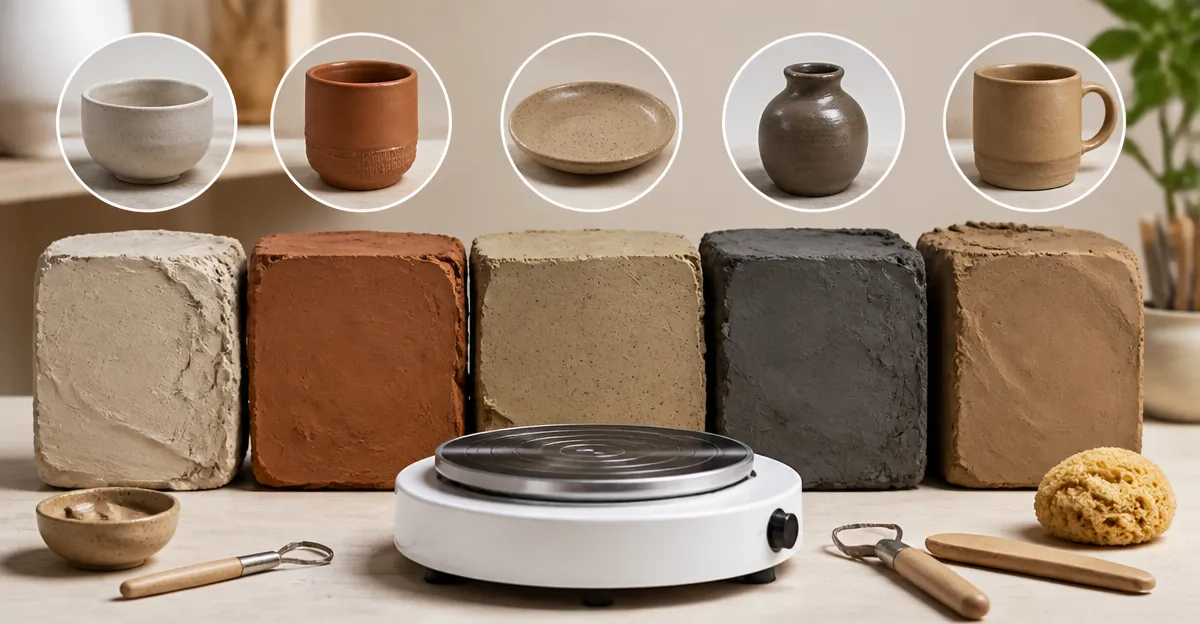
The market for pottery and modeling clays offers a wide range of options, yet not all products serve the same artistic or educational purpose. This article compares five Amazon‑listed clays, examining price, performance, and user feedback to help creators choose the most suitable material for their projects. The products include two low‑fire options, a mid‑fire stoneware, an air‑dry classroom clay, and a versatile mid‑fire mix. Understanding these differences matters because the firing temperature, plasticity, and durability directly influence the final artwork and the resources required.
Individual Product Overviews
Old Potters White Pottery Clay
- Price: $29.99
- Rating: 4.6/5.0 (638 reviews)
- Weight: 10 lb
- Firing range: Cone 04‑06 (low fire)
- Key strengths: high plasticity, smooth consistency, suitable for beginners and experts, USA‑made organic formula.
Customers praise its smooth texture and reliable firing: “I really like this clay super smooth, easy to work with… no cracking in the clay and it seems to have fully matured.”
Deouss Terra Cotta Pottery Clay
- Price: $14.99
- Rating: 4.4/5.0 (880 reviews)
- Weight: 5 lb
- Firing recommendation: bisque to Cone 04, glaze to Cone 06
- Key strengths: natural red terra‑cotta, non‑toxic, fine texture, easy to knead.
Positive feedback highlights its readiness for the wheel: “Arrived very moist, ready for a wheel. Very very fine/smooth consistency.”
Old Potters White Stoneware Clay
- Price: $29.99
- Rating: 4.6/5.0 (345 reviews)
- Weight: 10 lb
- Firing range: Cone 5‑10 (mid‑high fire)
- Key strengths: low iron content, strong plasticity, suitable for functional ware and decorative pieces.
Users note its versatility: “Easy to work with, good quality and texture… fires beautifully with my glazes and kiln.”
Crayola Air Dry Clay
- Price: $11.24
- Rating: 4.6/5.0 (24,843 reviews)
- Weight: 5 lb
- Drying method: air‑dry (24‑48 hours)
- Key strengths: non‑toxic, no kiln required, resealable bucket, ideal for classroom use.
Educators appreciate its ease of use: “Good price for this amount of clay. Very easy to work with, dries overnight and is easy to paint over with acrylic paint once dry.”
Rocky Mountain Mid Fire Clay
- Price: $44.95
- Rating: 4.5/5.0 (1,407 reviews)
- Weight: 25 lb
- Firing range: Cone 5‑7 (optimal at Cone 6)
- Key strengths: smooth white body, high vitrification, excellent wheel performance, gluten‑free.
Reviewers commend its workability: “Very easy to work with on the wheel… perfect moisture content. Drying time is average but it does not crack green ware.”
Head‑to‑Head Comparison
Price and Value
When evaluating cost per pound, Crayola Air Dry Clay offers the lowest price at $2.25 per pound, making it attractive for bulk classroom projects. Deouss Terra Cotta Clay follows at $2.998 per pound, providing a budget‑friendly low‑fire option. Both Old Potters clays cost $2.999 per pound, delivering comparable value for low‑fire (White Pottery Clay) and mid‑high fire (White Stoneware Clay) applications. Rocky Mountain Mid Fire Clay is the most expensive at $1.80 per pound, but its 25‑lb bag reduces the per‑pound cost relative to the smaller packages of other brands; the higher price reflects its professional‑grade performance.
Features and Specifications
- Firing Temperature: Old Potters White Pottery Clay (Cone 04‑06), Deouss Terra Cotta (Cone 04‑06), Old Potters Stoneware (Cone 5‑10), Crayola Air Dry (no kiln), Rocky Mountain Mid Fire (Cone 5‑7, optimal Cone 6).
- Plasticity: All low‑fire clays report “extraordinary plasticity”; the stoneware and mid‑fire clays emphasize “strong plasticity” and “smooth white body”.
- Non‑Toxic Certification: Deouss, Crayola, and Old Potters all state non‑toxic, organic formulas; Rocky Mountain notes gluten‑free status.
- Packaging: Crayola provides a resealable bucket, while the other products use standard bags.
Customer Ratings and Feedback
All five products maintain ratings above 4.4, indicating broad satisfaction. Crayola leads with over 24,000 reviews, reflecting its mass‑market appeal. Old Potters White Pottery Clay and Old Potters Stoneware Clay share the highest rating of 4.6, supported by comments about smooth texture and reliable firing. Deouss receives 4.4, with users noting its natural red hue and occasional mold growth—an accepted characteristic for many potters. Rocky Mountain’s 4.5 rating is bolstered by praise for its wheel performance and consistent moisture content.
Performance and Reliability
Low‑fire clays (Old Potters White and Deouss Terra Cotta) excel for beginner projects, hand‑building, and small‑scale wheel work. The stoneware variant offers higher temperature tolerance, making it suitable for functional ware that must withstand daily use. Crayola’s air‑dry formula eliminates the need for a kiln, but the finished pieces are more brittle and may develop minor cracks in thick sections. Rocky Mountain’s mid‑fire mix provides a professional‑grade body that vitrifies at Cone 6, delivering a creamy white finish and strong durability for both wheel‑thrown and hand‑built pieces.
Best Use Cases
- Beginners and classroom settings: Crayola Air Dry Clay and Deouss Terra Cotta Clay.
- Small studio artists seeking low‑fire flexibility: Old Potters White Pottery Clay.
- Potters creating functional tableware or high‑detail sculpture: Old Potters White Stoneware Clay.
- Professional studios requiring consistent mid‑fire performance: Rocky Mountain Mid Fire Clay.
Comparison Table
| Product | Price (USD) | Weight | Rating | Firing Range | Key Strength |
|---|---|---|---|---|---|
| Old Potters White Pottery Clay | 29.99 | 10 lb | 4.6 (638) | Cone 04‑06 | High plasticity, USA‑made |
| Deouss Terra Cotta Clay | 14.99 | 5 lb | 4.4 (880) | Cone 04‑06 | Natural red hue, non‑toxic |
| Old Potters White Stoneware Clay | 29.99 | 10 lb | 4.6 (345) | Cone 5‑10 | Low iron, high vitrification |
| Crayola Air Dry Clay | 11.24 | 5 lb | 4.6 (24,843) | Air‑dry (no kiln) | Kid‑friendly, resealable bucket |
| Rocky Mountain Mid Fire Clay | 44.95 | 25 lb | 4.5 (1,407) | Cone 5‑7 (optimal 6) | Professional‑grade, smooth white |
Pros & Cons
Old Potters White Pottery Clay
- Pros: Excellent plasticity, low‑fire versatility, organic, USA‑made.
- Cons: Requires kiln; may not be ideal for large, thick pieces without careful drying.
Deouss Terra Cotta Clay
- Pros: Natural red color, very smooth, budget‑friendly, non‑toxic.
- Cons: Moisture can promote mold growth; air‑drying leads to cracking if stored long.
Old Potters White Stoneware Clay
- Pros: Fires to high temperatures, low iron content reduces glaze interaction, suitable for functional ware.
- Cons: Higher firing temperature limits use for beginners without kiln access.
Crayola Air Dry Clay
- Pros: No kiln required, safe for children, large resealable pack, inexpensive.
- Cons: Dried pieces are brittle, may crack in thick sections, not suitable for functional pottery.
Rocky Mountain Mid Fire Clay
- Pros: Professional‑grade, excellent wheel performance, vitrifies at Cone 6, large 25 lb bag reduces per‑pound cost.
- Cons: Higher upfront price, may arrive overly moist requiring wedging.
Recommendations by Use Case
- Kids and classroom projects: Crayola Air Dry Clay – no kiln, easy clean‑up.
- Budget‑conscious beginners wanting low‑fire results: Deouss Terra Cotta Clay – smooth, inexpensive, and ready for wheel work.
- Hobbyists with a small kiln seeking versatile low‑fire material: Old Potters White Pottery Clay – reliable plasticity and good glaze response.
- Artists creating functional tableware or high‑detail sculpture: Old Potters White Stoneware Clay – high fire range and low iron content.
- Professional studios needing consistent mid‑fire performance: Rocky Mountain Mid Fire Clay – excellent wheel work, vitrifies at Cone 6.
Frequently Asked Questions
- Do any of these clays require a kiln? All except Crayola Air Dry Clay require firing in a kiln. Crayola hardens by air drying.
- Which clay is best for beginners? Deouss Terra Cotta Clay and Old Potters White Pottery Clay are both praised for smooth consistency and forgiving firing ranges.
- Can I use the low‑fire clays for functional dishes? Low‑fire clays are suitable for decorative items but are not recommended for daily‑use dinnerware due to lower durability.
- Is mold growth on moist clay harmful? Mold on clay is not harmful to humans; it is a natural plasticizer that many potters accept, as noted in Deouss product notes.
- What is the price advantage of buying larger bags? Rocky Mountain’s 25 lb bag lowers the per‑pound cost to $1.80, making it economical for high‑volume studios despite a higher total price.
- Can I repaint or seal air‑dry clay? Yes, Crayola Air Dry Clay can be painted with acrylics or watercolors and sealed with a varnish for added durability.
- Which product offers the highest firing temperature? Old Potters White Stoneware Clay fires up to Cone 10, suitable for the most demanding ceramic applications.
Conclusion
Each of the five clays examined fulfills a distinct niche within the ceramic and modeling community. For educational environments and children, Crayola Air Dry Clay delivers safety and convenience at a low cost. Budget‑oriented beginners will appreciate the smooth texture and low‑fire flexibility of Deouss Terra Cotta Clay. Hobbyists with a small kiln benefit from Old Potters White Pottery Clay’s reliable performance and easy glaze response. Artists requiring high‑temperature durability should select Old Potters White Stoneware Clay, while professional studios looking for consistent mid‑fire results will find Rocky Mountain Mid Fire Clay the most suitable despite its higher price. By matching the clay’s characteristics to the intended project, creators can achieve optimal results while respecting budget constraints.