Introduction
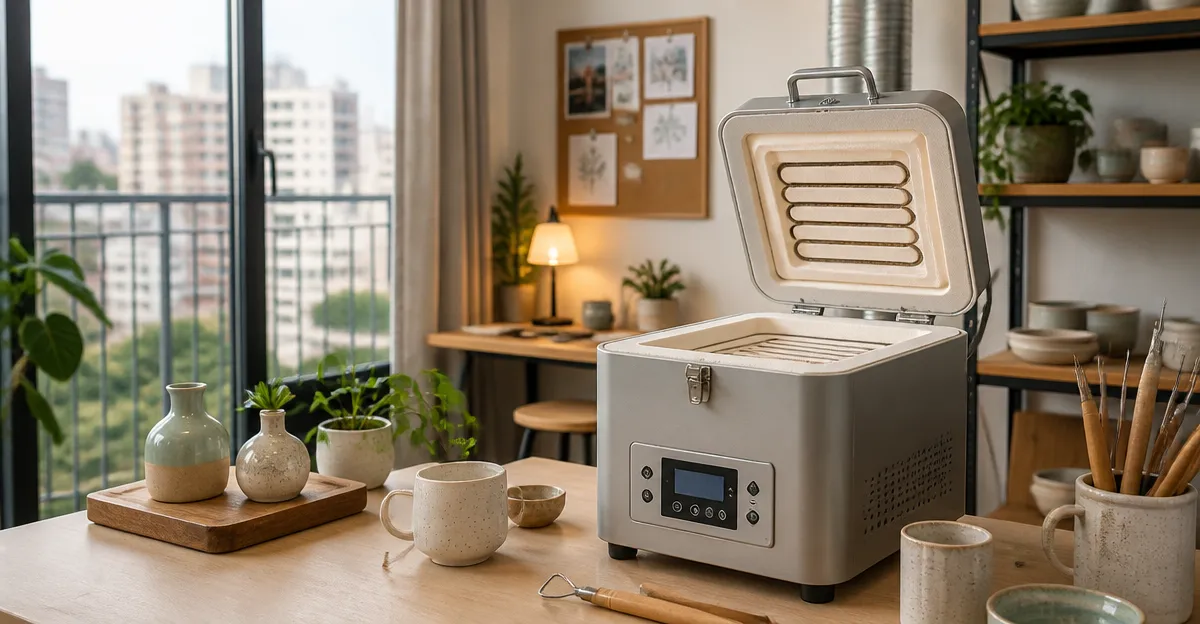
Living in an apartment does not preclude an artist from exploring ceramics and pottery. This guide explains how to select a kiln that fits limited space, electrical capacity, and safety constraints while delivering professional results. Readers will learn essential kiln terminology, compare five top‑rated models, and discover best‑practice firing techniques for small studios. By the end of the article, one will be equipped to choose the most suitable apartment‑friendly kiln and fire with confidence.
Background and Context
Traditional pottery kilns often require dedicated floor space, heavy ventilation, and a three‑phase power supply. In a typical apartment, the available footprint may be a kitchen counter or a small workshop nook, and the electrical circuit is usually limited to 15 A at 120 V. Understanding the relationship between power (watts), heating element design, and temperature control is therefore essential. Modern tabletop kilns incorporate PID (Proportional‑Integral‑Derivative) controllers, which maintain temperature within a narrow band, reducing the risk of thermal shock to both the workpiece and the surrounding environment.
Key Considerations for Apartment Kilns
Before evaluating specific products, consider four critical factors: space, power draw, temperature range, and safety features. Space includes both the kiln’s external dimensions and the required clearance for ventilation; many manufacturers recommend at least a few inches of free air on all sides. Power draw should not exceed 80 % of a standard 15 A circuit, which translates to roughly 1 440 W; however, kilns with higher wattage can be used safely if a dedicated circuit or a higher‑amperage outlet is installed. Temperature range determines which materials can be processed; most hobbyists need a maximum of 1 200 °C (2 192 °F) for low‑fire clays and metal‑clay alloys. Finally, safety features such as over‑temperature protection, insulated exteriors, and cooling vents are indispensable in a residential setting.
Product Recommendations
The following kilns meet the criteria outlined above and have proven performance in real‑world apartment studios.
VEVOR 1500W Electric Kiln
The VEVOR 1500W Electric Kiln offers a professional desktop furnace design with a 1500 W heating element and a maximum temperature of 2 192 °F (1 200 °C). Its PID digital control system provides precise temperature regulation, while the cooling holes on the top facilitate rapid heat dissipation after each cycle. The internal chamber is spacious enough for small to medium pottery pieces, and the unit is rated at 13 A, fitting comfortably within a typical 15 A household circuit. With a rating of 4.1 / 5.0 from 84 reviews, users praise its quick heating and reliable temperature accuracy, though a few reports mention power‑cord heating concerns that can be mitigated with a thicker cord.
VEVOR Programmable Electric Kiln
The VEVOR Programmable Electric Kiln builds on the previous model by adding a multi‑stage programmable controller capable of up to nine temperature ramps. This feature is valuable for complex glaze schedules or metal‑clay annealing cycles, allowing users to set precise soak times and ramp rates. Like its sibling, it delivers 1500 W of power and reaches 2 192 °F, but the added programmability justifies a modest price increase to $399.90. Reviewers note that the unit maintains the same compact footprint while offering greater flexibility for advanced firings.
Generic 1500W Tabletop Electric Kiln
The Generic 1500W Tabletop Electric Kiln is a budget‑friendly alternative that still provides PID temperature control and a maximum temperature of 2 192 °F. Its black carbon‑steel housing measures roughly 33.5 × 31.5 × 55 cm, making it suitable for tight apartment workspaces. At a price of $336.59 and a perfect 5 / 5 rating from three reviewers, the kiln is praised for its simplicity, reliable heating, and included accessories such as gloves and pliers. Although it lacks the advanced programmable stages of the VEVOR models, it remains an excellent entry point for hobbyists.
RapidFire Pro‑L Portable Digital Kiln
The RapidFire Pro‑L Portable Digital Kiln distinguishes itself through ultra‑compact design and RapidHeat technology, reaching 2 200 °F (1 205 °C) in just eight to ten minutes. Weighing only 12 lb, it can be moved between rooms or stored when not in use, a distinct advantage for renters. Its digital control panel offers straightforward temperature adjustments, and the 1500 W power draw aligns with standard household circuits. Priced at $649.95, it targets professionals who require fast turnaround and portability, though some users have reported durability concerns after extended use.
Generic 2000W Electric Kiln
The Generic 2000W Electric Kiln provides extra heating power for faster ramp‑up and larger batch processing. With a 2 102 °F (1 150 °C) maximum temperature and a spacious 16 × 16 × 13.8 cm interior, it accommodates multiple small pieces simultaneously. Its digital controller offers precise temperature monitoring, and the four‑sided surround heating ensures uniform heat distribution. Although the 2000 W draw exceeds the 1500 W limit of many apartment circuits, the unit can be safely operated on a dedicated 20 A line, a consideration for those willing to install a separate outlet. The kiln holds a 5 / 5 rating from four reviewers who commend its stability and build quality.
Comparison and Selection Guide
| Model | Power (W) | Max Temp (°F/°C) | Dimensions (in) | Price (USD) | Rating | Best For |
|---|---|---|---|---|---|---|
| VEVOR 1500W Electric Kiln | 1500 | 2192 °F / 1200 °C | 13.2 × 12.4 × 21.6 | 369.90 | 4.1 (84) | Artists needing reliable temperature control on a standard circuit |
| VEVOR Programmable Electric Kiln | 1500 | 2192 °F / 1200 °C | Similar to above | 399.90 | 4.1 (84) | Users who require multi‑stage firing schedules |
| Generic 1500W Tabletop Kiln | 1500 | 2192 °F / 1200 °C | 13.2 × 12.4 × 21.6 | 336.59 | 5.0 (3) | Budget‑conscious hobbyists |
| RapidFire Pro‑L Portable Kiln | 1500 | 2200 °F / 1205 °C | 8 × 7 × 13 (L × W × H) | 649.95 | 3.8 (45) | Portable studios and fast‑heat applications |
| Generic 2000W Electric Kiln | 2000 | 2102 °F / 1150 °C | ~6 × 6 × 6 (internal) | 369.80 | 5.0 (4) | Batch processing where a dedicated circuit is available |
When selecting a kiln, match the power rating to the available circuit, prioritize PID control for temperature stability, and consider whether programmable ramps are necessary for your glaze or metal‑clay workflow. If space is at a premium, the RapidFire Pro‑L’s lightweight chassis or the Generic 1500W Tabletop model provide the smallest footprints. For users who already have a dedicated 20 A line, the 2000 W kiln offers faster cycles and a larger chamber without sacrificing safety.
Best Practices & Tips for Apartment Firing
- Always place the kiln on a non‑combustible surface such as a concrete slab or a heavy‑duty metal tray.
- Maintain a minimum clearance of 6‑12 inches on all sides to allow heat to dissipate and to provide room for ventilation fans.
- Use a dedicated circuit or a surge‑protected power strip rated for the kiln’s amperage; avoid plugging the kiln into a shared outlet with high‑draw appliances.
- Invest in a quality fire‑resistant mat and keep a Class ABC fire extinguisher within arm’s reach.
- Schedule regular maintenance: inspect the heating element, verify the thermocouple’s calibration, and clean any dust from cooling vents.
- When firing metal‑clay, follow a slow ramp‑up to avoid thermal shock; a typical schedule might be 100 °F per minute up to 1200 °F, hold for 10‑15 minutes, then cool gradually.
- Document each firing cycle in a logbook, noting temperature, ramp rates, and any anomalies; this practice accelerates troubleshooting and improves repeatability.
Frequently Asked Questions
- Can I use a tabletop kiln in a bedroom? Yes, provided the room has adequate ventilation, a non‑combustible floor surface, and the kiln’s power draw does not exceed the circuit’s capacity.
- Do I need a special exhaust system? Most small kilns are designed with built‑in cooling vents that release heat slowly; a small portable exhaust fan can further reduce ambient temperature.
- What is the difference between PID and analog controllers? PID controllers continuously measure the actual temperature and adjust power output to stay within a narrow tolerance, whereas analog controllers rely on manual adjustments and are prone to temperature drift.
- How often should I replace the heating element? With typical residential use, a heating element lasts 2‑3 years. Signs of wear include uneven heating, frequent error codes, or a noticeable drop in maximum temperature.
- Is it safe to fire glazes that contain lead? Lead‑based glazes should only be fired in well‑ventilated areas with proper protective equipment; many apartment landlords prohibit the use of lead glazes due to health concerns.
- Can I fire stoneware in a 1200 °C kiln? Stoneware generally requires 1200‑1300 °C; a kiln rated at 1200 °C can fire low‑fire stoneware, but higher‑temperature stoneware may not reach full maturity.
- Do I need a separate fire‑proof cabinet? A fire‑proof cabinet adds an extra layer of safety, especially in multi‑unit buildings, but is not mandatory if the kiln is placed on a fire‑resistant mat and monitored during operation.
Conclusion
Choosing an apartment‑friendly kiln involves balancing space, power, temperature capability, and safety features. The VEVOR 1500W Electric Kiln and its programmable sibling provide reliable performance for most hobbyists, while the Generic 1500W Tabletop model offers a cost‑effective entry point. For artists who value portability, the RapidFire Pro‑L delivers rapid heating in a lightweight package, and the Generic 2000W kiln excels when a dedicated circuit is available for batch work. By adhering to the best‑practice guidelines outlined above, creators can enjoy the full creative freedom of ceramics without compromising the safety or comfort of their living environment.
Products Featured in This Guide
VEVOR 1500W Electric Kiln
Price: $369.90 | Rating: 4.1/5 (84 reviews)
Featured for its professional desktop design, precise PID control, and compatibility with standard 15 A circuits, making it ideal for apartment studios.
VEVOR Programmable Electric Kiln
Price: $399.90 | Rating: 4.1/5 (84 reviews)
Includes multi‑stage programmable ramps for complex glaze schedules, offering greater flexibility for advanced ceramic techniques.
Generic 1500W Tabletop Electric Kiln
Price: $336.59 | Rating: 5/5 (3 reviews)
Budget‑friendly option with reliable PID control, compact dimensions, and essential accessories for beginners.
RapidFire Pro‑L Portable Digital Kiln
Price: $649.95 | Rating: 3.8/5 (45 reviews)
Highlights rapid heating technology and ultra‑lightweight construction, perfect for mobile studios and quick turnaround projects.
Generic 2000W Electric Kiln
Price: $369.80 | Rating: 5/5 (4 reviews)
Provides higher wattage for faster cycles and a larger chamber, suitable for users with a dedicated 20 A circuit.