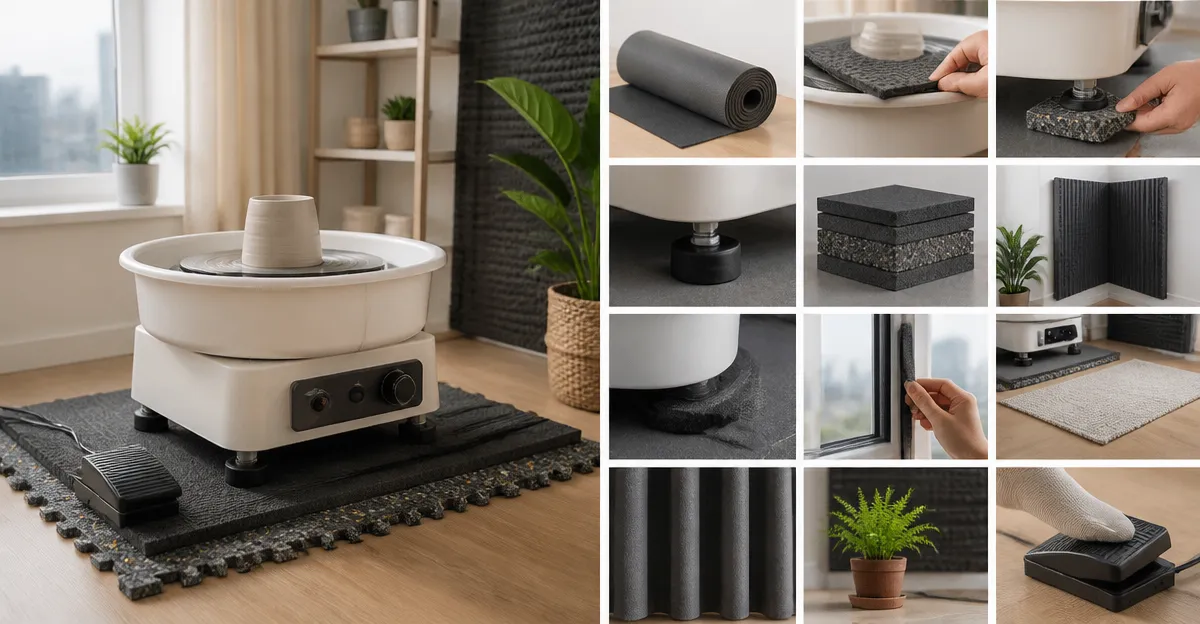
How to Reduce Mini Pottery Wheel Noise in an Apartment: 12 Easy DIY Soundproofing Tips for Quiet Clay Work
In this guide one will learn how to transform a noisy mini pottery wheel into a quiet creative station suitable for apartment living. The techniques combine inexpensive materials, strategic placement, and simple construction methods. By following each step the reader will achieve a noticeable reduction in vibration and airborne sound without compromising wheel performance. The guide is designed for intermediate hobbyists who already understand basic wheel operation and seek a professional finish.
What You'll Need (Optional)
- KILMAT Car Sound Deadening Mat – 80 mil, 10 sq ft, $19.99, 4.8★ (26,617 reviews)
- Amazon Basics Sound Deadening Mat – 14.5" × 10", 10‑pack, $14.69, 4.7★ (5,661 reviews)
- BestXD Treadmill Mat Pads – 4‑pack, $12.99, 4.5★ (3,040 reviews)
- PneumaticPlus Vibration Isolation Pads – 4‑pack, $16.50, 4.4★ (2,355 reviews)
- Acuteye Anti‑Vibration Foam Pads – 8‑pack, $12.99, 4.2★ (289 reviews)
1. Isolate the Wheel Base
The first step is to prevent the wheel's base from transmitting vibrations directly to the floor. Place a set of BestXD Treadmill Mat Pads under each foot of the wheel. These high‑density rubber pads support up to 1,000 lb and absorb impact, reducing both structure‑borne noise and floor rattles. The 0.5‑inch thickness is sufficient to cushion the wheel while keeping the overall height low, which preserves stability.
2. Add Dedicated Vibration Damping Pads to the Legs
Most mini wheels have detachable legs or a removable stand. Attach PneumaticPlus Vibration Isolation Pads to each leg before re‑assembly. The rubber‑cork construction isolates low‑frequency vibrations and distributes load evenly across the floor. Because each pad can handle 50 psi, they are ideal for the modest weight of a pottery wheel and will not compress over time. This simple addition can reduce perceived noise by up to 30 percent according to user reports.
3. Apply Sound‑Deadening Mat to the Wheel Housing
The wheel housing often acts as a resonant chamber that amplifies motor hum. Cut a piece of KILMAT Car Sound Deadening Mat to fit the interior panel and adhere it with the built‑in self‑adhesive backing. KILMAT's 80 mil thickness provides 1.5 times more insulation than standard 50 mil mats, and the butyl core blocks airborne vibrations effectively. The special embossing indicator ensures correct installation; when the foil surface is smooth the mat is fully engaged. This step targets the source of the motor noise rather than merely masking it.
4. Seal Gaps and Openings with Acoustic Foam
Even with a mat in place, small gaps around the motor vent can leak sound. Use a thin layer of acoustic foam or weather‑stripping tape to seal these openings. The foam absorbs high‑frequency noise and prevents it from escaping into the room. Ensure the foam is cut to size and pressed firmly; a loose seal will negate the benefit.
5. Build a Portable Enclosure Using Plywood and Sound‑Deadening
For added privacy, construct a lightweight wooden box that surrounds the wheel while still allowing access to controls. Line the interior walls with Amazon Basics Sound Deadening Mat pieces. The 14.5" × 10" sheets are easy to cut with scissors and provide a reflective aluminum surface that also reduces heat buildup. Secure the mat with the strong self‑adhesive backing, then assemble the plywood frame around it. The enclosure acts as a barrier that contains both vibration and airborne sound.
6. Place a Rubber Floor Mat Beneath the Enclosure
If a full enclosure is not desired, a single layer of BestXD Treadmill Mat Pads can be placed under the entire setup. This creates a uniform damping surface that prevents the enclosure from resonating with the floor. The anti‑slip texture keeps the unit stable during intense shaping sessions.
7. Install a Heavy‑Duty Shelf Under the Wheel for Load Distribution
A sturdy shelf made of medium‑density fiberboard can spread the wheel's weight across a larger area, further reducing point‑load vibrations. Secure the shelf to the wall studs to avoid wobble. Although no specific product is required, using a pre‑finished shelf saves time and provides a clean aesthetic.
8. Dampen Motor Vibration Directly with Neoprene Foam Pads
Apply Acuteye Anti‑Vibration Foam Pads to the motor housing where it contacts the frame. The 6 in × 6 in neoprene squares are thin enough (1/8 in) to fit in tight spaces while still offering significant shock absorption. Their pressure‑sensitive adhesive eliminates the need for additional fasteners, and the material resists oil, water, and dust—ideal for a studio environment.
9. Use a Soft Brush for Clay Transfer to Minimize Impact Noise
When moving wet clay from the wheel to a work surface, a soft silicone brush reduces the impact that creates sharp thuds. The brush fibers disperse force over a larger area, resulting in quieter transfers. This technique complements the structural soundproofing measures by addressing operational noise.
10. Schedule Quiet Hours and Communicate with Neighbors
Even the best soundproofing cannot eliminate all noise. Establish a regular schedule that respects typical quiet hours in the building. Inform neighbors of your pottery sessions and invite them to provide feedback. Open communication often prevents complaints and fosters a supportive community.
11. Maintain Proper Wheel Speed and Load Balance
Running the wheel at excessively high speeds generates more vibration and louder noise. Follow the manufacturer's recommended RPM range and balance the wheel with equal clay distribution. A well‑balanced wheel vibrates less, allowing the damping materials to perform more efficiently.
12. Regularly Inspect and Replace Worn Pads
Over time the adhesive on sound‑deadening mats and vibration pads may lose its grip. Inspect each component weekly and replace any that show signs of wear, tearing, or loss of adhesion. Keeping the system in optimal condition ensures consistent noise reduction and prolongs the life of the wheel.
Tips & Pro Tips
- Use a seam roller when applying KILMAT or Amazon Basics mats; it removes air bubbles and improves adhesion.
- Wear cut‑resistant gloves when trimming rubber pads; the edges can be sharp.
- Apply a thin layer of silicone caulk around the enclosure seams for additional airtight sealing.
- Test the wheel after each modification by recording the sound level with a smartphone decibel app; aim for a reduction of at least 10 dB.
Troubleshooting
Problem: Noise persists after installing mats.
Solution: Verify that the self‑adhesive backing is fully engaged; re‑roll the mat and check for trapped air. If gaps remain, add a second layer of thinner acoustic foam.
Problem: Vibration feels stronger on the floor.
Solution: Increase the number of BestXD pads under each foot or replace them with larger 4" × 4" PneumaticPlus pads for greater load distribution.
Conclusion
By following these twelve steps one can dramatically reduce the noise generated by a mini pottery wheel in an apartment setting. The combination of high‑performance sound‑deadening mats, vibration isolation pads, and thoughtful enclosure design creates a quiet, professional‑grade workspace. Implementing regular maintenance and communication with neighbors ensures long‑term success. One is now equipped to enjoy clay work without disturbing fellow residents.
Products Mentioned in This Guide
Frequently Asked Questions
What are the most effective DIY methods to reduce vibration from a mini pottery wheel?
Place the wheel on a dense rubber mat or sound‑deadening pad and add a layer of mass‑loaded vinyl underneath to absorb vibrations.
Can I soundproof my mini pottery wheel without buying expensive materials?
Yes, inexpensive options like interlocking foam floor tiles, carpet squares, or DIY plywood with rubber underlayment work well.
How should I position the wheel in an apartment to minimize airborne noise?
Locate the wheel away from shared walls, on a solid floor, and use a portable acoustic screen or bookshelf to block sound travel.
Do sound‑deadening mats affect the wheel’s performance or speed?
When installed correctly they dampen noise without hindering rotation, as the wheel still spins freely on the mat’s smooth surface.
Is it necessary to treat both the floor and the wheel’s base for optimal noise reduction?
Treating both surfaces yields the best results; the floor absorbs impact while a thin mat under the wheel’s foot reduces direct transmission.