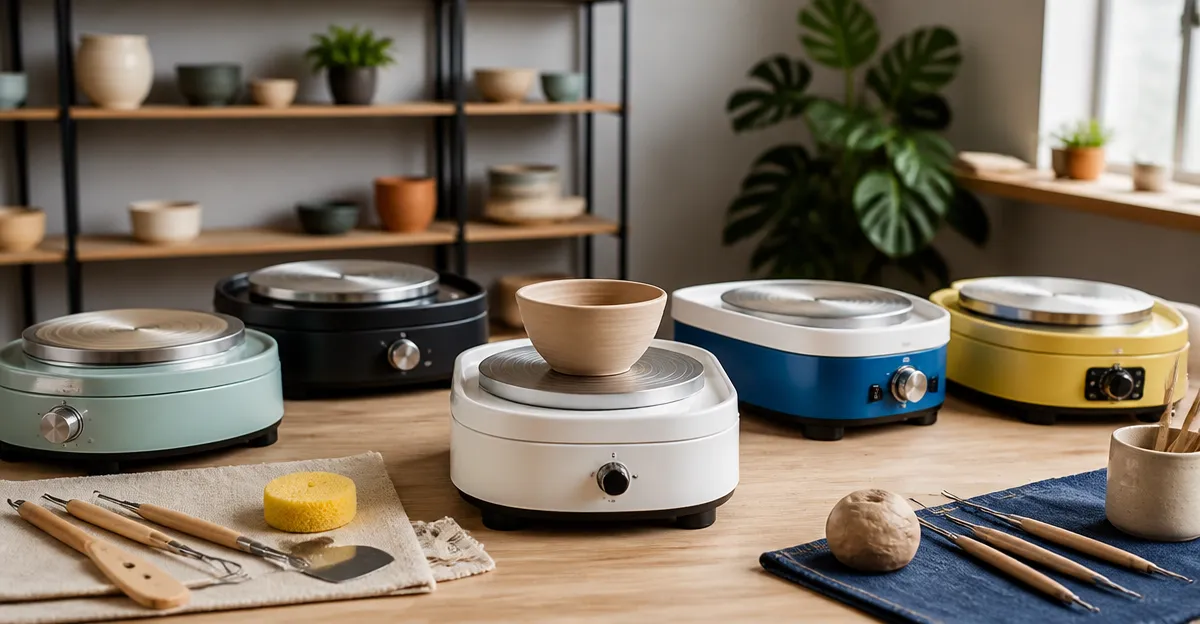
Where to Buy Mini Pottery Wheels: Ultimate 2026 Buying Guide to Best Shops and Deals
Introduction
The market for compact pottery wheels has expanded dramatically as families and hobbyists seek creative outlets that fit within limited spaces. This guide explains the essential factors to consider when purchasing a mini pottery wheel, compares the leading models available in 2026, and provides actionable tips for getting the best value. Readers will leave with a clear understanding of how each wheel performs, where to buy them, and how to maximize their creative experience.
Throughout the article, the guide references five highly rated products that exemplify different price points and feature sets. Each product is linked directly to its Amazon listing so that readers can verify pricing and availability instantly.
Background and Context
Mini pottery wheels are electric or battery‑powered devices that rotate a small turntable, allowing users to shape air‑dry clay with hand tools. They differ from full‑size studio wheels in size, motor power, and intended use. Most models target beginners, children, and adults who want a low‑maintenance, mess‑controlled experience.
Key terminology includes:
- RPM (Revolutions per minute): The speed range of the turntable; higher RPM enables faster shaping but may be harder for novices.
- Two‑way rotation: The ability to spin the wheel clockwise and counter‑clockwise, useful for left‑handed users.
- Air‑dry clay: Clay that hardens without firing, ideal for home use.
- Splash tray: A removable basin that catches excess water and clay, simplifying cleanup.
Understanding these concepts helps shoppers match a wheel to their skill level, workspace, and budget.
Choosing the Right Mini Pottery Wheel
When evaluating a mini pottery wheel, consider four primary categories: performance, completeness of the kit, safety and durability, and price‑to‑value ratio. The following sections explain each category and recommend a product that excels within it.
Performance and Motor Quality
Motor performance influences speed consistency, noise level, and longevity. Wheels with a 0–300 RPM range generally provide enough flexibility for beginners while remaining quiet enough for shared living spaces. The Alldeer Mini Pottery Wheel offers a simple 0–300 RPM control, a metal turntable, and a dual‑direction switch, making it a solid all‑round performer.
For users who prefer a slightly higher ceiling, the VEVOR Mini Pottery Wheel reaches 0–320 RPM and produces a maximum noise output of 55 dB, which remains comfortable for home environments.
Completeness of the Kit
A comprehensive starter kit reduces the need for additional purchases. The Alldeer Mini Pottery Wheel includes eight plastic shaping tools, eight wooden tools, three blocks of air‑dry clay, twelve paints, an apron, and a detailed manual. This breadth of accessories supports the entire creative process from shaping to painting.
The Insnug Mini Pottery Wheel also provides a full set of tools, a 2.2 lb air‑dry clay supply, and a detachable water basin, positioning it as a strong mid‑range option.
Safety, Noise, and Clean‑up
Safety features such as low‑noise motors and removable splash trays are essential for households with children. The VEVOR Mini Pottery Wheel advertises a noise level of ≤55 dB and a removable water basin that prevents water from entering the motor housing. The Make It Real Mini Pottery Studio goes further by offering a mess‑free design and USB power, eliminating the need for an external adapter.
Price‑to‑Value Ratio
Budget‑conscious shoppers should weigh price against the included accessories and durability. The Make It Real Mini Pottery Studio is priced at $19.99, making it the most affordable entry point, though it targets a younger audience with simplified tools. For a balance of price and professional‑grade features, the Insnug Mini Pottery Wheel at $79.98 offers a robust metal turntable and low‑noise operation.
Comparison Table
| Product | Price | Speed Range (RPM) | Turntable Size | Included Clay | Rating | Key Advantage |
|---|---|---|---|---|---|---|
| Alldeer Mini Pottery Wheel | $69.99 | 0–300 | 6 in (15 cm) | 3 blocks (≈0.5 lb total) | 4.3/5 (239 reviews) | All‑in‑one starter kit |
| VEVOR Mini Pottery Wheel | $36.90 | 0–320 | 2.6 in / 3.9 in (dual turntables) | None included | 4.2/5 (153 reviews) | Quiet motor, dual turntables |
| Insnug Mini Pottery Wheel | $79.98 | 0–300 (approx.) | 6 in | 2.2 lb air‑dry clay | 4.1/5 (1,312 reviews) | Compact design, low noise (60 dB) |
| Make It Real Mini Pottery Studio | $19.99 | Not specified (USB powered) | Mini (≈3 in) | Air‑dry clay (amount not listed) | 4.4/5 (881 reviews) | Mess‑free, beginner‑focused |
| National Geographic Kids Pottery Wheel | $69.99 | 2‑speed (exact RPM not listed) | Not specified | 2 lb air‑dry clay | 4.5/5 (2,009 reviews) | Award‑winning brand, educational content |
Best Practices & Tips for Mini Pottery Success
Even the most feature‑rich wheel will produce subpar results without proper technique. The following recommendations help users of any skill level achieve consistent outcomes.
- Prepare the workspace: Use a sturdy table, place a waterproof mat underneath, and keep cleaning wipes within reach.
- Condition the clay: Knead air‑dry clay until it is pliable; this prevents cracking during shaping.
- Center the clay correctly: Engage the two‑way rotation feature, apply gentle pressure, and use the centering tool (available in the Make It Real kit) to align the mass on the turntable. li>Control speed gradually: Start at a low RPM for centering, then increase to medium speed for pulling up walls, and finally reduce speed for trimming.
- Maintain cleanliness: After each session, empty the splash tray, wipe the turntable with a damp sponge, and store tools in the provided compartments.
- Experiment with finishes: Use the included paints or acrylics, but allow the clay to dry completely before applying color to avoid smearing.
Following these steps reduces frustration and extends the lifespan of the wheel.
FAQ
1. Can I use regular pottery clay on a mini wheel?
Yes, most mini wheels accept standard air‑dry or polymer clay. However, heavy clay may strain low‑power motors; it is advisable to keep each piece under one pound.
2. Do I need a separate power source?
All listed models include a power adapter except the Make It Real Mini Pottery Studio, which operates via USB. A standard wall outlet or USB charger will suffice.
3. How noisy are these wheels?
Noise levels range from 55 dB (VEVOR) to 60 dB (Insnug). Both are comparable to a quiet conversation and suitable for shared living spaces.
4. Are the wheels safe for children?
All products feature child‑friendly designs, non‑sharp components, and low‑speed settings. Supervision is recommended for users under eight years old.
5. Is the included clay reusable?
Air‑dry clay hardens when exposed to air; it can be re‑softened with water if the drying process has not completed. For repeated use, store unused clay in an airtight container.
6. What warranty or support is offered?
Most brands provide a one‑year limited warranty. The National Geographic kit includes a U.S. support team, while VEVOR’s customer service has received mixed reviews.
Conclusion
Mini pottery wheels provide an accessible gateway to the tactile joy of hand‑building clay. By assessing motor performance, kit completeness, safety features, and price, shoppers can select a model that aligns with their creative goals. The Alldeer Mini Pottery Wheel stands out for its all‑in‑one approach, VEVOR excels in quiet operation, Insnug offers a compact, low‑noise design, Make It Real delivers the most affordable beginner experience, and National Geographic combines educational value with award‑winning credibility. Armed with the comparison table, best‑practice tips, and FAQs, readers are prepared to purchase confidently and begin shaping their own pottery masterpieces.
Products Featured in This Guide
Alldeer Mini Pottery Wheel
Price: $69.99 | Rating: 4.3/5 (239 reviews)
Featured for its comprehensive starter kit, dual‑direction speed control, and beginner‑friendly 6‑inch metal turntable.
VEVOR Mini Pottery Wheel
Price: $36.90 | Rating: 4.2/5 (153 reviews)
Featured for its quiet motor, dual turntables, and affordable price point, making it ideal for families on a budget.
Insnug Mini Pottery Wheel
Price: $79.98 | Rating: 4.1/5 (1,312 reviews)
Featured for its compact footprint, low‑noise operation, and inclusion of 2.2 lb of air‑dry clay for immediate use.
Make It Real Mini Pottery Studio
Price: $19.99 | Rating: 4.4/5 (881 reviews)
Featured for its ultra‑affordable price, mess‑free design, and USB power, making it perfect for younger creators.
National Geographic Kids Pottery Wheel
Price: $69.99 | Rating: 4.5/5 (2,009 reviews)
Featured for its award‑winning brand reputation, educational materials, and robust two‑speed motor suitable for both children and adults.
Frequently Asked Questions
Where can I purchase mini pottery wheels online in 2026?
Major retailers like Amazon, Walmart, and specialty art stores such as Blick and Michaels carry a wide selection, and many brands also sell directly via their own websites.
What factors should I consider when choosing a mini pottery wheel?
Look at motor power, wheel diameter, weight capacity, portability (battery vs plug‑in), and included accessories like splash guards or tool kits.
Are battery‑powered mini pottery wheels as reliable as electric ones?
Battery models offer portability but typically have lower torque; for consistent performance on larger projects, a plug‑in wheel is usually more reliable.
What price range can I expect for a quality mini pottery wheel?
Budget options start around $50, mid‑range models range $100‑$200, and premium wheels with advanced features can exceed $300.
Do mini pottery wheels come with warranties or return policies?
Most reputable brands include a 1‑year limited warranty and accept returns through the retailer, but always verify the specific terms before purchasing.