Introduction
One of the most common concerns for anyone sending delicate pottery, decorative tiles, or handcrafted mugs is ensuring that the item arrives intact. This guide explains a systematic approach that combines proven packing methods with carefully selected supplies. Readers will learn how to protect small ceramic pieces from vibration, compression, and sudden impacts during transit. By following the steps, one can reduce the risk of costly breakage and improve customer satisfaction.
What You'll Need
- Famagic Small Shipping Boxes – 10‑pack, 10x7x5 inches, $16.99, 4.7/5 rating.
- Anylabel Fragile Shipping Labels – 500 stickers, $5.99, 4.9/5 rating.
- Scotch Heavy Duty Packing Tape – 6 rolls, $8.88, 4.8/5 rating.
- Bryco Goods Packing Paper Sheets – 50 sheets, $7.99, 4.8/5 rating.
- Duck Small Bubble Cushion Wrap – 12" x 30 ft, $8.85, 4.7/5 rating.
Step 1: Choose and Prepare the Shipping Box
Select a Famagic Small Shipping Box that comfortably accommodates the ceramic item without forcing it into a tight space. The 10x7x5 dimensions provide a balance between protection and weight efficiency for most small pottery pieces. Before placing any contents, inspect the box for dents or tears that could compromise structural integrity. If any damage is observed, replace the box to maintain a reliable barrier.
Next, reinforce the box by applying a single strip of Scotch Heavy Duty Packing Tape along all seams. The industrial‑strength, solvent‑free adhesive creates an instant seal that resists slivering, splitting, and tearing during handling. Use the included dispenser to cut precise lengths and avoid excess overlap. This reinforcement ensures that the box will not open unintentionally when subjected to rough handling.
Step 2: Cushion the Bottom of the Box
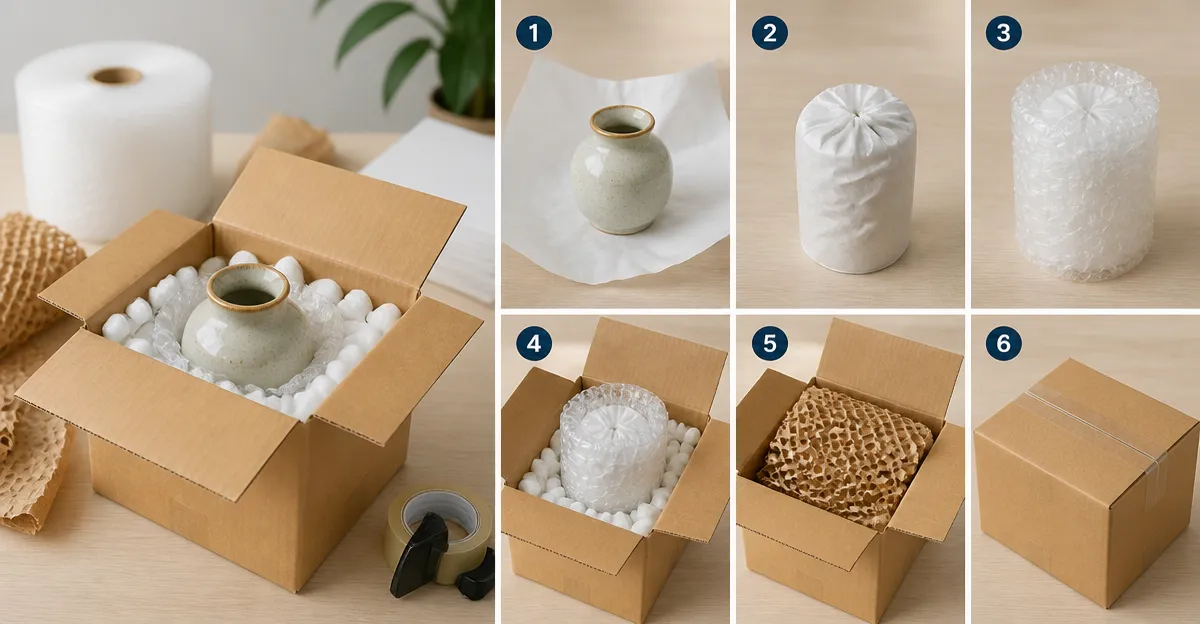
Lay a generous layer of Bryco Goods Packing Paper Sheets on the floor of the box. The unbleached newsprint is lightweight yet offers sufficient bulk to absorb minor shocks. Aim for a thickness of at least two sheets, which equates to roughly 0.5 inches of cushioning. This base layer prevents direct contact between the ceramic piece and the cardboard, reducing the chance of cracks from bottom pressure.
For added resilience, place a strip of Duck Small Bubble Cushion Wrap over the paper. The small bubbles conform closely to irregular shapes, creating a uniform protective shell. Because the wrap is perforated every 12 inches, it can be torn to the exact length needed without scissors. Position the bubble side against the ceramic item to maximize shock absorption.
Step 3: Wrap the Ceramic Item Individually
Begin by unrolling a section of the Duck Small Bubble Cushion Wrap and laying it flat on a clean surface. Place the ceramic piece in the center, then fold the edges of the wrap over the item, ensuring that the bubble side faces inward. Secure the wrap with a short piece of Scotch Heavy Duty Packing Tape to keep the cushioning in place.
If the item has protruding handles, knobs, or delicate glaze, add an extra layer of Bryco Goods Packing Paper Sheets before the bubble wrap. The paper fills small crevices and prevents the bubble layer from tearing under stress. This combination of paper and bubble wrap offers a multi‑layer defense that is both lightweight and cost‑effective.
Step 4: Fill Remaining Voids and Add Reinforcement
After the wrapped ceramic item is positioned in the center of the box, assess the surrounding space for gaps. Fill any voids with crumpled Bryco Goods Packing Paper Sheets. The paper’s neutral color prevents staining, and its thickness prevents shifting during transit. Distribute the filler evenly on all sides to create a snug fit that immobilizes the item.
For larger voids, especially those created by irregularly shaped items, add a second layer of Duck Small Bubble Cushion Wrap. The lightweight nature of the bubbles does not add significant weight, which keeps shipping costs low while still providing cushioning against impacts. Once the box is fully packed, close the lid and seal the top seam with another strip of Scotch Heavy Duty Packing Tape, ensuring a continuous seal.
Step 5: Label the Package for Careful Handling
Apply at least two Anylabel Fragile Shipping Labels on opposite sides of the box. The fluorescent red background with bold white text draws immediate attention, prompting carriers to treat the package with caution. Because each label measures 2" x 3", they are large enough to be seen without overwhelming the surface area of the small box.
Place the labels in a visible location, preferably near the center of each side, to avoid being obscured by tape or other markings. If multiple boxes are being shipped together, consider adding a secondary “Do Not Drop” sticker for added emphasis. Finally, write the recipient’s address clearly and affix a postage label, ensuring that all markings are legible and free from smudges.
Tips & Pro Tips
- Use a double‑wall box for exceptionally valuable ceramics; the extra layer adds rigidity without a large weight penalty.
- When wrapping items with delicate glaze, avoid excessive pressure; a thin layer of paper underneath the bubble wrap prevents direct contact that could cause chipping.
- Seal the box on all six faces; even the bottom seam can open under weight if not reinforced.
- Consider adding a “This Side Up” label if the item has a preferred orientation, reducing the chance of upside‑down handling.
- Store excess packing paper in a dry environment to prevent moisture absorption, which could affect paper strength.
Troubleshooting
Problem: The box feels loose after packing.
Solution: Add additional layers of Bryco Goods Packing Paper Sheets until the item does not shift when the box is gently shaken. A snug fit prevents movement that can lead to breakage.
Problem: Labels do not adhere to the box surface.
Solution: Ensure the box surface is clean and dry before applying the Anylabel Fragile Shipping Labels. The high‑quality adhesive on the labels is designed to stick firmly to cardboard, but dust or oil can reduce effectiveness.
Conclusion
By following the systematic approach outlined above, one can ship small ceramic items with confidence that they will survive the rigors of transit. The combination of sturdy boxes, layered cushioning, strong sealing tape, and clear fragile labeling creates a protective envelope that minimizes risk. Applying these techniques consistently will reduce return rates, protect brand reputation, and provide peace of mind to both sender and recipient.
Products Mentioned in This Guide
Frequently Asked Questions
What type of box is best for shipping small ceramic items?
Use a sturdy, appropriately sized box like the 10x7x5 in Famagic Small Shipping Boxes to minimize movement.
How should I wrap a ceramic piece before placing it in the box?
Wrap the item in several layers of packing paper or bubble wrap, securing it with tape to cushion against shocks.
Do I need to label the package as fragile?
Yes, apply fragile shipping labels such as Anylabel stickers so handlers know to treat the parcel with care.
What tape is recommended for sealing ceramic shipments?
Seal the box with heavy‑duty packing tape like Scotch Heavy Duty Tape to ensure it stays closed during transit.
How can I prevent breakage from vibration during shipping?
Fill any empty space with crumpled packing paper or peanuts to immobilize the ceramic and absorb vibrations.